🚗 How To Judge A Safe Gap In Traffic
One of the biggest differences between a nervous learner and a confident driver is the ability to judge safe gaps.
Many learners either:
❌ Pull out too early.
❌ Wait far too long.
❌ Miss several safe opportunities.
The examiner isn’t looking for perfect judgement.
They’re looking for safe, sensible decisions made with confidence.
What Is A Safe Gap?
A safe gap is simply:
Enough time to complete your manoeuvre without causing another road user to brake, swerve or change speed significantly.
If another driver has to react because of your decision, the gap probably wasn’t suitable.
The Biggest Mistake Learners Make
Many learners wait until the road is completely empty.
That isn’t necessary.
On busy roads, if you wait for perfect conditions, you may never move.
The goal is to recognise a safe gap—not a perfect one.
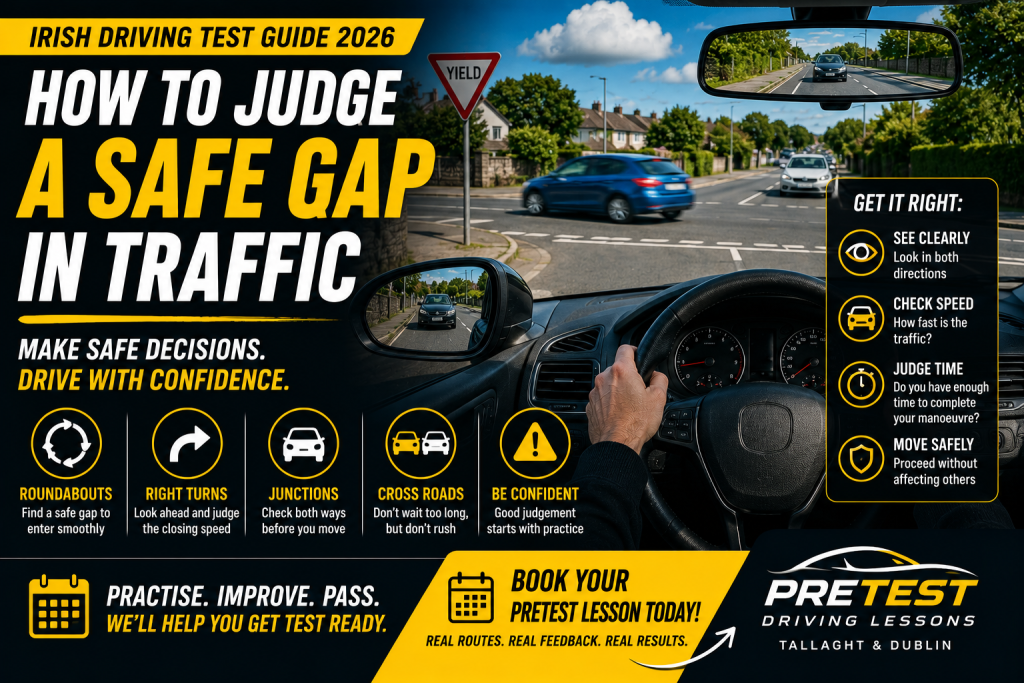
Where You’ll Need To Judge Gaps
🔄 Roundabouts
Judge the speed and position of approaching vehicles.
Look for a gap that allows you to enter smoothly without affecting traffic already on the roundabout.
↩ Right Turns
Don’t focus only on the nearest vehicle.
Look well ahead and judge the closing speed of oncoming traffic.
🚗 Emerging From Junctions
Check both directions.
Assess:
- Vehicle speed
- Distance
- Road width
- Your own ability to move away smoothly
🚙 Crossing Busy Roads
Sometimes the safest decision is to wait.
Other times, hesitation simply creates unnecessary delays.
Five Questions To Ask Yourself
Before moving, ask:
👀 Can I clearly see?
Poor visibility means you may need a larger gap.
🚗 How fast is the approaching vehicle?
Distance alone doesn’t tell the full story.
⏱️ Do I have enough time to complete the manoeuvre?
Think about the whole manoeuvre—not just starting it.
🚦 Will I force someone to slow down?
If yes…
Wait.
😊 Can I move away confidently?
If you’re likely to stall or crawl away, allow a larger gap.
Why Learners Misjudge Gaps
Common reasons include:
- Nervousness
- Looking too close
- Watching only one direction
- Waiting for perfection
- Poor clutch control reducing confidence
- Not planning ahead
The more experience you gain, the easier judging gaps becomes.
How Examiners Assess Gap Judgement
The examiner asks:
✅ Was it safe?
✅ Did you affect another road user?
✅ Did you make reasonable progress?
They understand you’re a learner.
They’re looking for good judgement—not perfection.
Practice Makes This Skill Easier
Gap judgement improves with experience.
During pretest lessons you’ll begin to recognise similar traffic situations and build confidence in making safe decisions.
The aim is to make your judgement calm, consistent and predictable.
Frequently Asked Questions
Can I fail for choosing a gap that’s too small?
Yes.
If another road user has to brake or take avoiding action, it can result in serious faults.
Can I lose marks for waiting too long?
Yes.
Repeatedly missing safe opportunities may be marked as undue hesitation.
Do I always need a large gap?
No.
The size of the gap depends on road conditions, visibility, traffic speed and your manoeuvre.
Is gap judgement tested throughout the driving test?
Yes.
You’ll judge gaps at junctions, roundabouts, right turns, lane changes and when moving off.
Related Guides
➡️ Driving Too Slowly During The Irish Driving Test
➡️ Roundabouts Explained
➡️ Observation Faults ExplainedObservation Faults Explained: The Most Common Observation Mistakes In The Irish Driving Test (2026)
➡️ Common Reasons Learners Fail The Irish Driving Test
🚗 Build The Confidence To Make Safe Decisions
Judging traffic gaps isn’t about taking chances—it’s about learning to recognise when it’s genuinely safe to move.
At Pretest Driving Lessons, we’ll coach you through real-life junctions, roundabouts and busy Tallaght test routes where learners often struggle with gap judgement. You’ll learn how to read approaching traffic, make confident decisions, and avoid both unsafe manoeuvres and unnecessary hesitation.
✅ Ready to improve your judgement and drive with confidence?
Book your pretest driving lesson today and practise on real Irish driving test routes with an experienced ADI. We’ll help you develop the judgement, confidence and timing needed to make safe decisions under pressure—giving you the best possible chance of passing your Irish driving test first time.